Why does the year start on January 1?

Contents
Janus 1, the new year and the consular year
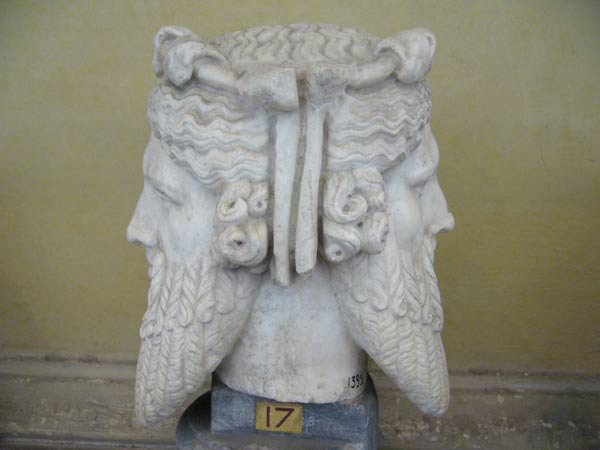
In ancient Rome, the Romans worshiped a god named Janus (Janus, Ianus). He was the god of doors, transitions, and endings. Janus had two faces: one looking forward and the other looking back, into the past.
Emperor Julius Caesar thought it would be appropriate for January, the eponymous month of Janus, to be the gateway to a new year, and when he created the Julian calendar, he made January 1 the first day of the year.
That meant that the consular year began on the same day. Thus, the new consuls also assumed office on January 1.
The Julian calendar
For Julius Caesar, the Julian calendar was a political tool and also a weapon. As the Roman armies conquered new lands, the Empire often gave its new subjects some freedom to retain certain religious and social customs. As we already saw in the article Life in the time of Jesus Christ.
However, after the calendar was created, it was used in all corners of the Empire, not only for consistency, but to remind all citizens of the Roman authority and power of Caesar.
After the Roman Empire fell to the detriment of Christianity, which spread across Europe, the New Year celebration was seen as a pagan holiday. At this point it should be noted that the Romans celebrated the first day of the new year enjoying orgies and drunkenness, so the first day of the year moved to a more pleasant date to Christianize it.
the romans celebrated the first day of the new year enjoying orgies and drunkenness
This calendrical chaos worked for a time, but a frustrated pope ended it during the Middle Ages. An error in Caesar’s calendar had caused the Julian year to be out of alignment with the solar year.
The reason for the leap year
In 1582, the difference had grown in 10 days. Over the years, the Spring Equinox and, with it, Easter, changed, and Pope Gregory XIII was tired of having to restart the holidays. Gregorio devised a new calendar that used a single leap day every four years to keep it aligned. He also restored January 1 as the first day of the year.
Most Catholic countries adopted the Gregorian calendar quickly, but Protestant and Eastern Rite countries took slightly longer.
Protestants complained that the “Roman Antichrist” was trying to trick them into worshiping him on the wrong days. The Eastern Rite churches wanted to keep the tradition, so some Eastern European countries kept the Julian calendar for centuries more.
Russia did not change to the Gregorian calendar until after the 1917 revolution, and even today the Eastern Orthodox Church follows the traditional or revised Julian calendar to establish its liturgical year.
Finally, the Protestant nations changed their minds and returned to the Gregorian calendar. England, Ireland, and the British colonies made January 1 the beginning of the year in early 1752.