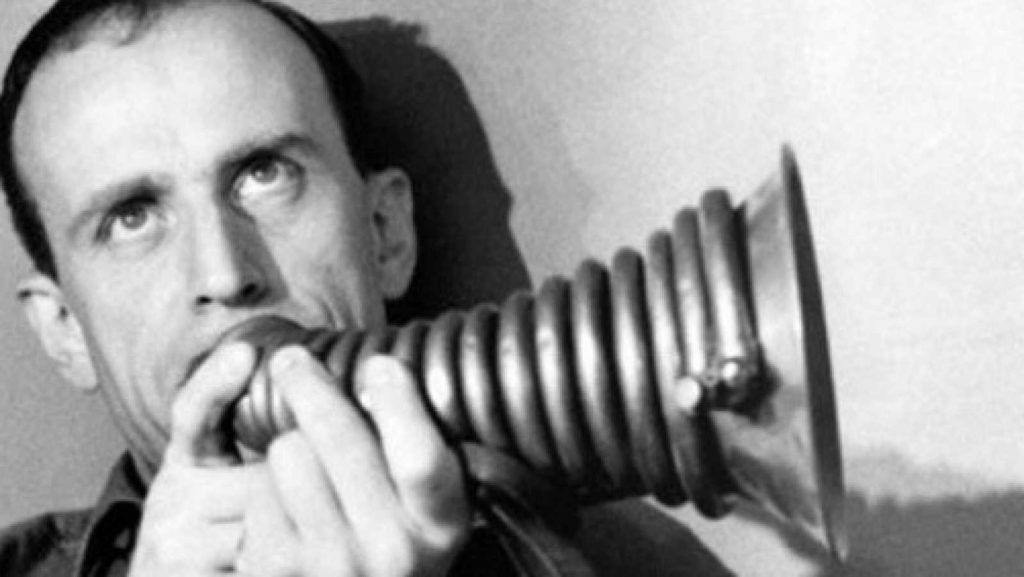
Boris Vian’s novel “I Spit on Your Graves” (J’irai cracher sur vos tombes) became a bestseller upon its release in 1947. Today, it remains a harsh and disturbing novel, though perhaps not as shocking as it was at the time. Its content was enough for the French Cartel d’Action Sociale et Morale—a league dedicated to upholding “good morals” that had already censored Henry Miller—to denounce it.
Vian was put on trial, not as the author, but for supposedly translating “objectionable material.” He was sentenced to pay a fine of 100,000 francs, and in the summer of 1950, the French government banned all further sales of the book. By then, it is estimated that the book had already sold over 500,000 copies. Vian was not the first, nor the last, to be denounced for going against public morals. The poet Baudelaire and his editor faced a similar fate for ‘The Flowers of Evil’.
In just two weeks, from August 5 to 23, 1946, Boris Vian dedicated himself to writing, copying the style and manner of American noir novels.
Watch our latest Shorts!
Ironically, the ban was phenomenal for “I Spit on Your Graves,” keeping it alive in public memory and leading to countless re-editions that increased its sales and its legend.
Why did Boris Vian write “I Spit on Your Graves”?
In late 1946, Boris Vian’s friend, Jean d’Halluin, asked him to write a novel in the style of Henry Miller’s Tropic of Cancer for his new publishing house, Editions du Scorpions. In just two weeks, between August 5 and 23, Vian threw himself into writing, mimicking the style of American hardboiled crime novels. His goal, in his own words, was to include “4 erotic scenes that prepare the world of tomorrow and pave the way for the true revolution.”
But Vian did not sign the book with his own name. Instead, he created a brilliant hoax: he claimed to be merely the translator of “I Spit on Your Graves,” the work of a supposed young, Black American writer named Vernon Sullivan, whose book had been banned in his native United States. None of this was true.
As if the literary scandal wasn’t enough, life and fiction tragically collided when a man who had strangled his lover was found to have left a copy of Vian’s book open on his nightstand. One of the passages was underlined: “Again I felt that strange sensation that ran down my back when my hand closed over his throat and I couldn’t contain myself; I arrive; it was so strong that I let it go…” Critics and the public drew a direct line between the two acts, suggesting the book had inspired the murder, as if the man would not have killed his lover without having read Vian’s work.
Originally, the novel was going to be titled “I will dance on your grave,” but Vian’s first wife, Michelle Léglise, was more intrigued by the idea of “spitting” than “dancing” and soon convinced Boris to change it.
The inspiration for the novel came from an article in the American weekly Collier’s, which explained that about two million Black Americans had “crossed the color line,” allowing them to pass as white. It was estimated that by the mid-20th century, between five and eight million white Americans had Black ancestry.
Synopsis: “I Spit on Your Graves”
The plot of “I Spit on Your Graves” centers on Lee Anderson, a light-skinned Black man passing as white. He seeks to avenge the murder of his brother, who was lynched for falling in love with a white woman. Anderson’s plan involves unchecked rape and physical violence, and his victims are two young, wealthy sisters whom he befriends while working in a bookstore, immersing himself in their world of alcohol and parties.
Boris Vian’s Little Revenge
That same year, Vian published three more books in a similar style. One of them, The Dead All Have the Same Skin, contains a curious anecdote. The novel has parallels with I Spit on Your Graves, featuring a protagonist passing as white who commits rape and murder. As a small act of revenge, Vian chose to name his protagonist Daniel Parker—the same name as the head of the Cartel d’Action Sociale et Morale that had denounced him.
“Are these guys supposed to be Americans? What crap!” Shortly thereafter, he died of a cardiac arrest.
As literary history notes, fate had a final, cruel joke in store for Boris Vian regarding I Spit on Your Graves. In 1959, Vian attended the premiere of the film adaptation of his novel. He was not happy with the result, and if you read the novel and watch the film, you will notice the many differences. The shocking ending of the book has little in common with the film’s more poetic conclusion.
Shortly after the screening began, Vian exclaimed: “Are these guys supposed to be Americans? What crap!” A few moments later, he died, the victim of a cardiac arrest.
It was not until after his death that his books saw widespread reprinting. Censorship did him no favors during his lifetime. But now, after all this time, Boris Vian is still alive, perhaps spitting and dancing on the graves of those who censored him in the name of good manners.
🌍 Available in Spanish